
Article summary
SALi based suspension units were invented in Britain by Bill Courtney. But while bad research using the wrong material and doing the wrong experiments was being done at Manchester University, excellent research, using the right materials and doing the right experiments was being done in China.
Britain
The taxpayer funded CrashSALi Project (2002-3) should have investigated SALi based suspension units in the UK, but the University research was fraudulent and did not deliver any sensible results.
When Bill Courtney's MP asked awkward questions about the failed research, the University bluffed its way out of the problem.
It ignored the MP's questions and created an illusion that the work had been done correctly by using legal threats to try and force Bill to pay for the fraudulent work.
China
Somehow Bill's suspension unit designs have ended up in China. Engineers at Nanjing University have published papers which suggest that SALi based suspension units are a Chinese invention. They have refused to sign a research licensing agreement with Cheshire Innovation or take up a proposal to collaborate with Cardiff University on development.
To be fair to the Chinese
(i) Unlike Manchester University, the quality of their research work is excellent.
(ii) Following warning letters from Bill Courtney and a complaint to the publishing house Elsevier, publication of papers has ceased. It is possible that the Chinese were duped into plagiarizing Courtney's work by a rogue employee at Manchester University. We present the evidence below.
Britain vs. China

| British taxpayer funded research into SALi suspension systems at Manchester University | Chinese government funded research using designs copied from an unpublished Manchester University thesis | |
|
APPARENTLY WILFULLY BOTCHED, but the University still claimed funding for the work. Legal action was threatened when the inventor refused to approve transfer of public funds and his MP tried to intervene. Manchester University has created false evidence that hides any suspicion that one of its employees has leaked British IP to the Chinese. (The cover-up by senior management at Manchester University is exposed on our PedSALi page.) |
Researchers at Cardiff University working on SALi projects discovered the Chinese work during their literature search The Chinese work was EXCELLENT, but they refused to cooperate with the British inventor or Cardiff University. |
What Britain is losing:
(i) About 45 million road vehicles are manufactured world-wide each year. Suspension manufacturing is a Multi-Million Pound segment of this industry. As we seek new export markets post Brexit, an opportunity to create world beating manufacturing jobs is being lost.
(ii) Green energy
One of Bill's suspension unit designs has the capacity to convert suspension vibrations into electricity for charging a car battery.
Has Manchester University tricked the current UK government?
The last coalition government deserves credit for investing heavily in university research. For example, on the strength of its" excellent materials science publications record", it awarded Manchester University £235 million to establish a national materials science research centre.
In order to explain their fraudulent results, the Manchester University authors had to include three violations of the laws of physics in their paper. Anyone who is familiar with Newton's laws of motion and the law of conservation of energy will be able to understand why the "physics" in this paper is nonsense.
That's the outline. Now here are the details.
1. The SALi suspension unit concept
The diagram below illustrates the prototype suspension unit specified in the CrashSALi research contract.
Unlike the SALi filled car bumpers described on the PedSALi page, suspension units must be made from high quality elastic materials that can be subjected to many millions of compression cycles without degrading.
Recommended materials
The research laboratories of the Malaysian Rubber Producers Research Association (MRPRA) advised on the materials to be used. They provided sample materials for testing.
Here is the design
*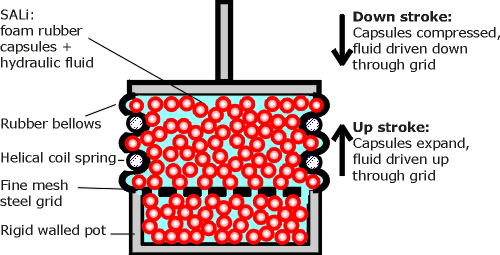
Figure 1. The British prototype suspension unit
This lightweight unit does not require any precision made parts, so manufacturing costs should be low. The design could be used for a wide range of vibration isolation applications in mechanical and civil engineering.
[
2. CrashSALi
The CrashSALi Project (2002-3) was a 65% British taxpayer funded feasibility study into crash protection and vehicle suspension applications of SALi. Cheshire Innovation paid the balance.
The project was suggested to Bill by honest people working for the business arm of Manchester University. Their thinking was that if Bill held stewardship for the CrashSALi funds he would be in a stronger position to exert influence over the management of the PedSALi project that was heading towards failure.
The people working for the business arm at that time acted in good faith and are in no way responsible for the subsequent disgraceful behavior of their research colleagues.
CrashSALi was a profit sharing partnership, because Bill Courtney, (trading name Cheshire Innovation) was contractually bound to give 50% of his royalties from all applications of SALi Technology to the University
[For proof of the profit sharing contract see Appendix 2 below.]
Copies of the research contract are held by The Small Business Service and Manchester University.
How Britain lost a fourteen year technology lead
For some reason that has never been explained, the contractually agreed materials were not used for the Manchester University research. One thing is certain. Bill's research supervisor at the University was uneasy about the media attention he was receiving and the prospect of the fortune he was likely to earn from successful SALi based products. He had been throwing spanners into the SALi development works since Bill first started at the University in 1996.
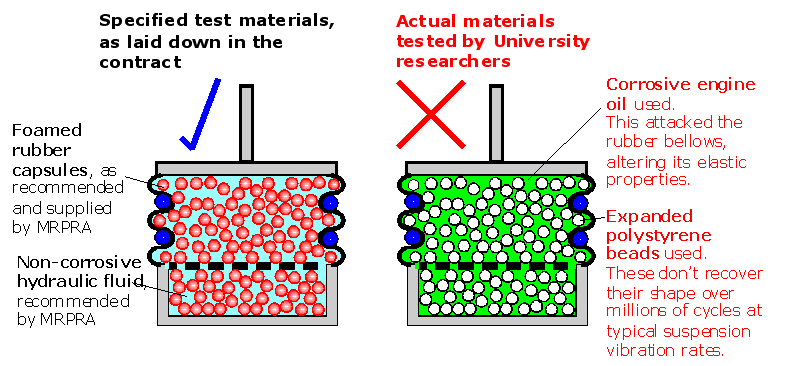
Figure 2. The materials specified in the contract were not investigated.
For innocent eyes, the researchers managed to hide the effects of using bad materials by carrying out a single drop impact test on the unit. A valid multiple cycle test would have exposed the fraud.
In contrast, the Chinese researchers used the correct materials, carried out the correct tests and obtained excellent results.
The Manchester University research results were an embarrassing nonsense. They could not be used to attract commercial interest in Britain.
The contractual cover-up
This was pretty shocking at the time. But it looks even worse in the light of the government's recent decision to make Manchester the national centre for materials research.
Bill Courtney, a research fellow of the University, refused to approve payment of taxpayer funds for the Manchester University research until the work had been done correctly. But the University was reluctant to admit to bad research. It attempted to shift the blame by claiming that the contract had been completed and pursuing Bill for debt recovery.
This is a very disturbing precedent, because British science should learn from its mistakes, not resort to legal intimidation, to hide its research failings.
Also, small businesses such as Cheshire Innovation must be able to trust universities who handle their intellectual property. It is unethical to bully a contractually binding profit and risk sharing partner, to take all the losses when a joint project fails.
What is even more worrying is that the well intended business arm of the University had suggested the CrashSALi project to Bill.
But when things went wrong, it was Bill, not the fraudulent researchers that the University management went after.
Bill Courtney's MP took these problems up to the (then) Minister for Science, Lord Sainsbury.
The minister ruled that Courtney must resolve the dispute with Manchester University himself. (See Appendix 1 below.)
Fifteen years have been frittered away on this dispute because Bill Courtney cannot afford to employ a solicitor, for a prolonged dispute with Britain's largest University.
Meanwhile, the Chinese are stealing SALi Technology prospects from under out noses. Bill lost his £140,000 retirement savings working with Manchester University trying to develop SALi Technology. After spending many thousands of Pounds on British, French, German and American patents he ran out of funds and the patents were abandoned. This means that the Chinese can now develop SALi Technology without breaching patent law.
[But to be fair to the Chinese, they appear to have halted their research since Bill complained to them.]
3. The valid Chinese research on SALi suspension units
In July 2009, a diligent Cardiff University student who was working with Bill Courtney made a disturbing discovery: state funded research into SALi based vibration isolators is making rapid progress in China. Unlike the Manchester research, the Chinese work is enviably good!
Two papers have been published by engineers at Nanjing University:
- H. d. Teng, Q. Chen, Study on vibration isolation properties of solid and liquid mixture, Journal of Sound and Vibration, 2009 doi.10.1016/j.jsv.2009.04.036.
- H. d. Teng, Q. Chen, Performance Characteristics of SALiM Isolator, Proceedings of the World Congress in Engineering, 2009, Vol. II.
Bill subsequently discovered that The Chinese State Laboratory of Electrical Insulation and Power Equipment had also published research on SALi. [”Study on an Audible Noise Reduction Measure for Filter Capacitors Based on Compressible Space Absorber Wu Peng et al, State Key Lab. of Electr. Insulation & Power Equip., Xi'an Jiaotong Univ., Xi'an, China, Power Delivery, IEEE Transactions, vol. 26, Issue 1, pages 438- 445.”]
Bill wrote to the Nanjing University authors, but they were not interested in a British-Chinese collaboration. They have also refused to sign a licensing agreement to legitimise their work.
However the Chinese researchers have acknowledged Bill's unpublished 1998 MPhil research thesis in their references.
Here’s the header from one of the Nanjing University papers. Note that Bill's brand name for SALi has been subtly changed from SALiTM to SALiM.
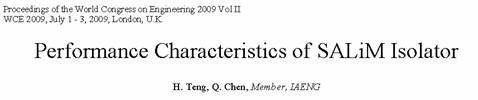
The authors published high quality research, similar to what should have been done at Manchester University.
For example, their multiple compression tests, showed no tailing off in performance.
Here is the evidence:
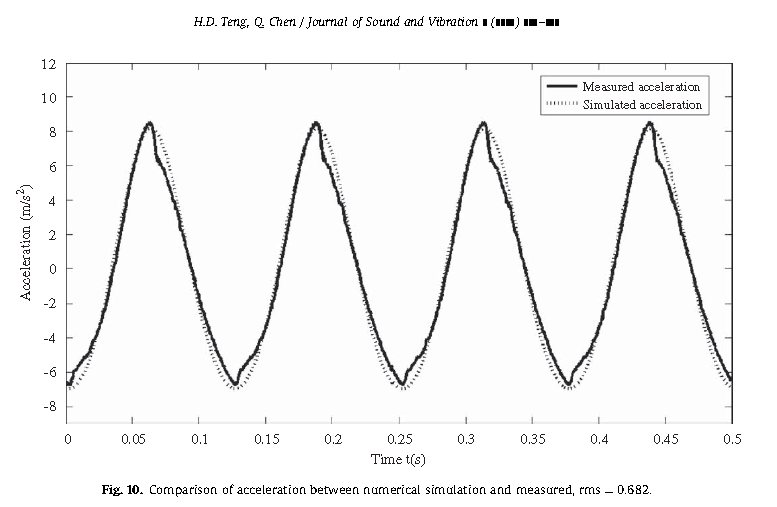
Figure 3. This Chinese graph, (originally published as Figure 10 in [1] above.) demonstrates that if the right materials are used, a SALi based suspension system makes a full recovery after each vibration.
A reminder about the bad Manchester research
Instead of subjecting the SALi suspension system to a series of vibrations they simply dropped a heavy weight onto the suspension unit so that it was compressed once. Consequently the deterioration in performance caused by using poor materials did not show up.
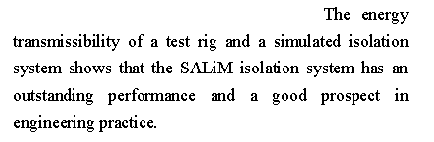
After doing the correct research, the Chinese authors were impressed by SALi's car suspension potential. They conclude:
Reference 2 above, page 4.
This promise of “outstanding performance and a good prospect in engineering practice” should be a wakeup call to a sleepy Britain. China may be developing know-how that could take engineering jobs from Britain as we move away from Europe.
The embarrassing questions about Chinese acquisition of British intellectual property must be answered before more British taxpayers funds are handed over to Manchester University for materials research.
The Nanjing papers include plagiarised material from Bill's 1998 MPhil research thesis. This material is very difficult to get hold of, because the thesis remains unpublished.
Here’s an example of the plagiarism:
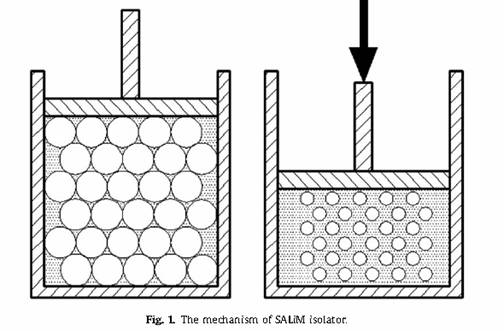
Figure 4. This is a reproduction of Figure 1 in Teng and. Chen, reference 1 above.
For comparison, Bill's thesis diagram is reproduced below.
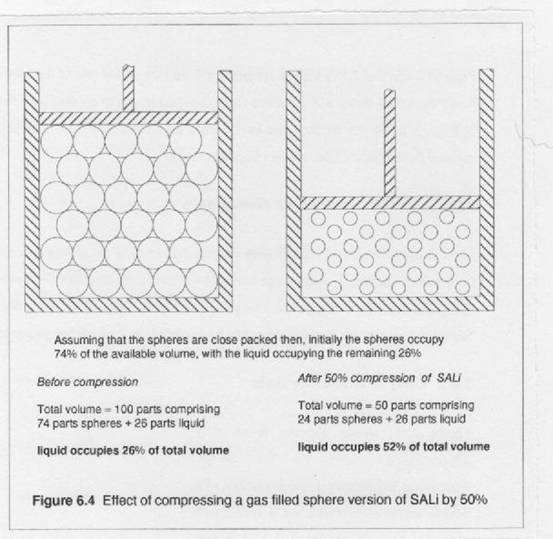
Figure 5. This is a reproduction of Figure 6.4 from "Courtney, W. A., Preliminary investigations into the mechanical properties and potential applications of a novel shock absorbing liquid, MPhil Thesis, Manchester School of Engineering, University of Manchester (1998)"
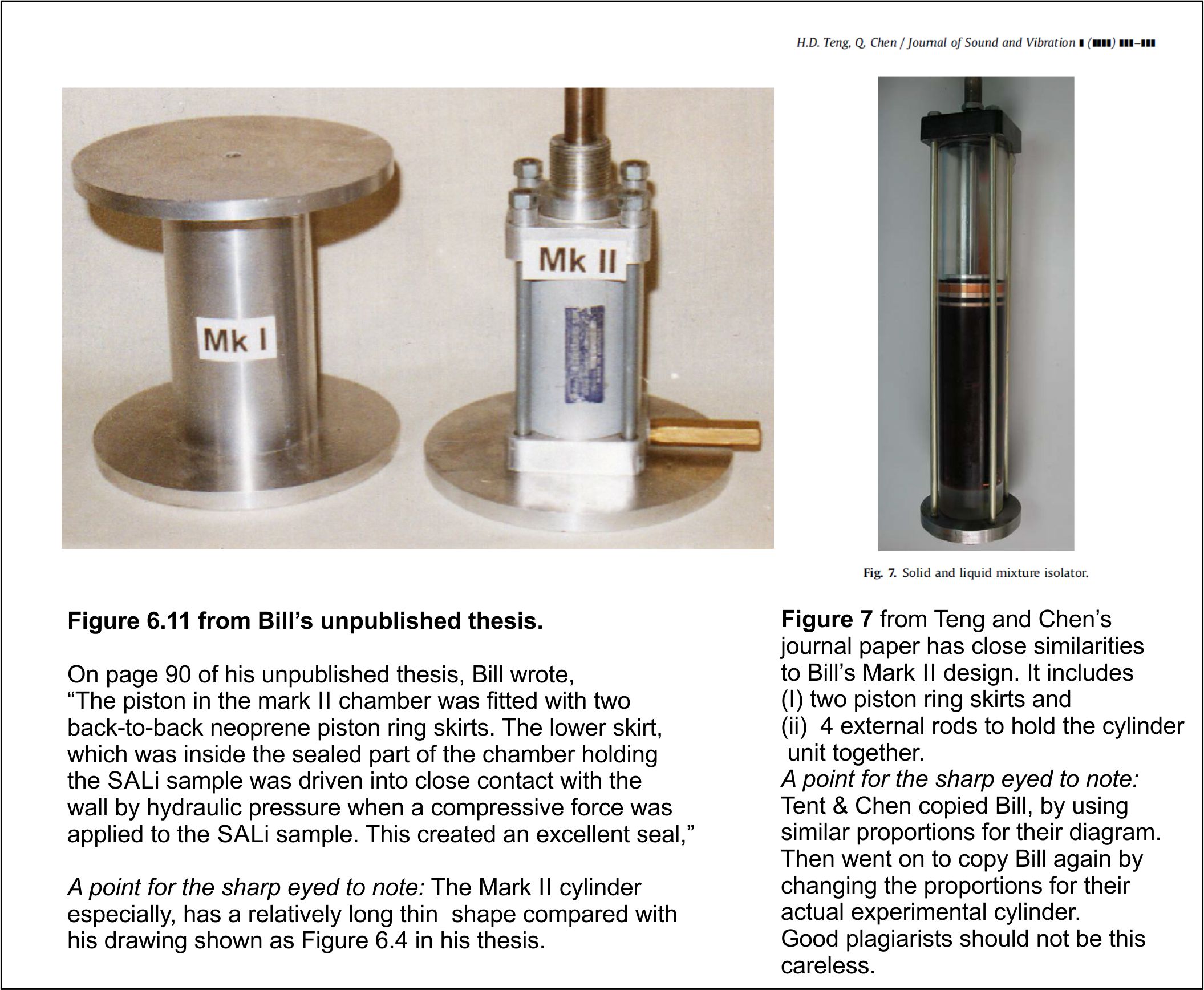
Figure 6. A second example of plagiarism by Teng and Chen. But, the "curious facts" below cast doubt on their culpability.
Some curious facts linking Manchester with Nanjing University
# In 2002, when the botched CrashSALi research was starting at Manchester University, the Manchester research team leader co-authored four conference papers presented at Nanjing University, China.
# Two years later he co-authored a paper written with one of the authors for the excellent Chinese SALi research.
Here are the joint paper reference details:
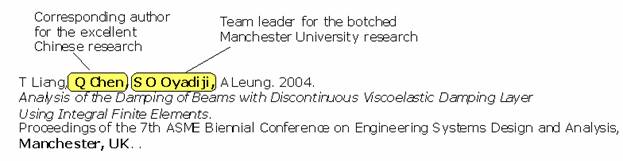
# In the same year (2004) Manchester University tricked Bill's MP and tried to force the inventor to pay for the botched Manchester research by threatening him with legal action.
# The fact that the Chinese authors cited Bill's unpublished thesis in their papers suggests that his intellectual property was mischievously handed over to them, rather than being illicitly acquired.
# Following a complaint by Bill to the publishing house Elsevier, no further Chinese papers on SALi were published.
# This evidence of criminal disregard for British business interests was submitted to the Manchester University formal enquiry discussed on our PedSALi page.
But the enquiry Report makes no reference to it.
# At the time of the formal enquiry, two Manchester University physicists were favorites to win that years Nobel Prize. The chair of the formal enquiry panel was also their head of department. (And quite understandably boasts of publishing joint papers with them.)
Was the truth about misbehaviour at Manchester University hidden for fear that it would damage the chances of Manchester academics winning the Nobel Physics Prize?
4 Confronting some painful truths
Bill Courtney proudly describes himself as "A Manchester man." He is particularly proud of its science, technology and manufacturing heritage. He acknowledges that the majority of researchers at Manchester University are doing excellent work and fully supports the government decision to establish a national materials science research institute in Manchester. But he strives for a better Manchester future based on honesty, not unsustainable research fraud.
If Britain wants to learn lessons, to protect our manufacturing sector, the following questions require answers:
Q. How did an unpublished British materials science thesis end up in Chinese hands?
Q. Why did the Formal Enquiry at Manchester University ignore the evidence?
(We discuss this in detail in Appendix Four below.)
Q. Why did the 2005 UK government remain passive when presented with evidence that publicly funded research into a British invention was botched and then covered up?
(For proof of government indifference, see Appendix 1 below.)
A note of caution about the Chinese authors, Teng and Chen
There is clear evidence that Teng and Chen had claimed Bill's suspension unit design as their own. But given the massive amount of evidence of unprofessional behaviour by Bill's supervisor, they should be treated as "innocents led astray", rather than mischievous plagiarists out for personal gain.
5. A second example of wasted British research on SALi Technology
Manchester University also failed to use the correct materials for the PedSALi project. As a result, Britain lost the opportunity to take the lead in developing soft, pedestrian friendly car bumpers.
For their bad bumper research the Manchester workers used the right filling, but the wrong packaging material.!
Instead of using low stretch packaging that allowed the SALi capsules to compress, they used elastic packaging that prevented them from working. This was no accident, but was done under protest from Courtney and Dow Chemicals employees who were also involved in the PedSALi project. Please see figure 3 on our "What is SALi?" page for an explanation of why elastic packaging is ineffective.
The Manchester researchers on the PedSALi project also carried out improbable research that defied the laws of physics.
6. Some good news
 We have the research skills
Excellent work on SALi Technology has been done at Cardiff University.
Here are two examples of good SALi research at Cardiff University
ONE
Suspension units: Figure 17 on our Battery charging car suspension page shows an encouraging set of results using a valid test and appropriate materials. Unfortunately, this belated British work has to be done on a shoestring budget in the form of short undergraduate projects. The research management is very professional, but we are continuing to fall behind the competition because progress is inevitably slow.
TWO
Soft, pedestrian friendly car bumpers:
Based on undergraduate project work, Cardiff University has presented an excellent conference paper on SALi Technology.
Here is the reference
Davies, H., Holford, K., Assoune, A., Trioulier, B., Courtney, B. 2009. Pedestrian Protection Using a Shock Absorbing Liquid (SALi) Based Bumper System. 21st International Technical Conference on the Enhanced Safety of Vehicles, Stuttgart 2009.
Q. So what is holding the British research back
A. The published Cardiff research was limited in scope because it was done without the support of public funding.
The University applied for EPSRC funding to continue the soft bumper research, to meet a revised EU pedestrian friendly vehicle deadline of 2912.
However the government had already provided generous public funding for bad SALi research related to soft car bumpers at Manchester, to meet an earlier 2005 deadline.
As you can see from the PedSALi page, Manchester University has taken the money and managed to bury their bad research by smearing Bill Courtney's professional name.
He needs to clear his name against the false accusations made in a Manchester University formal enquiry report before asking for more public funds for SALi research.
7. A timeline showing the key events as Britain lost its technology lead to China
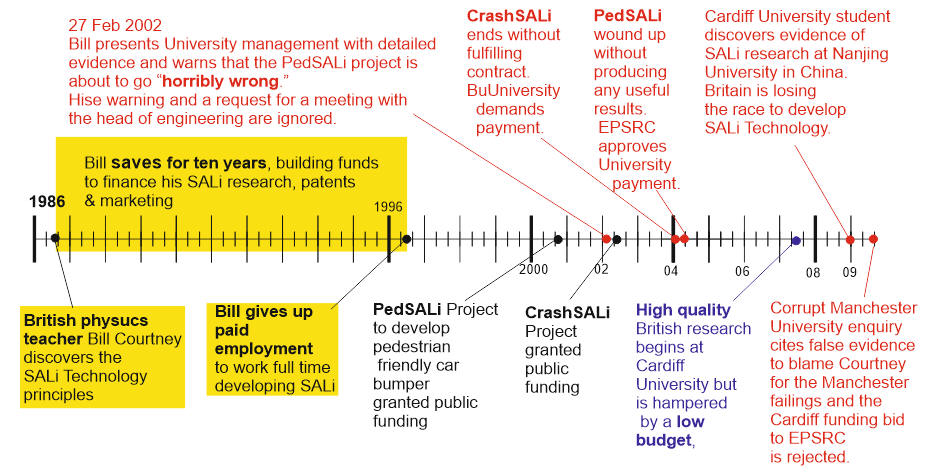
SALi Technology was invented in Britain in 1986. Since then the inventor has lived frugally and received generous British taxpayer funding to help him develop it. But thanks to the shameful behavior at Manchester University, the Chinese are now in the best position to commercially develop it.
Click to read Bill's 2002 warning to Manchester University that things could go "horribly wrong" if urgent management action was not taken to resolve the PedSALi problems.
Over the years many British companies have suggested applications for SALi, once the core university research has been done.
We outline many of them on our "What is SALi?" page.
Appendix 1
Extract from Lord Sainsbury's letter, 2005
This 'handwashing letter' was addressed to Braham Brady MP.
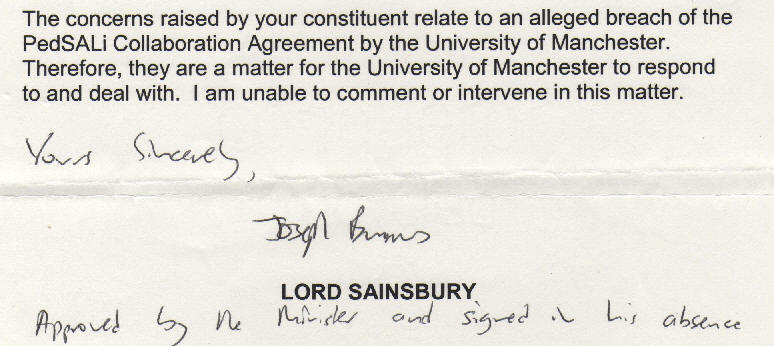
Bill Courtney comments, "This letter provides clear evidence that the 2005 government failed to exercise due diligence, to protect British taxpayer funds. Bill courtney cannot do its policing work for it."
But during better times, the government was happy to be associated with promising SALi research
In response to a parliamentary question from Peter Bottomley MP, the government had earlier claimed credit for investing public funds in the PedSALi project when it looked as though its future outcome would save pedestrian lives. [Hansard 25 October 2001.] http://www.publications.parliament.uk/pa/cm200102/cmhansrd/vo011025/text/11025w18.htm
So, When Courtney provided Lord Sainsbury with evidence that the project had collapsed due to fraud and that the University of Manchester refused to take action, Sainsbury's assertion that, "I am unable to comment or intervene in this matter" amounted to misconduct. When lives were at stake, it was Sainsbury, not Courtney who had the primary responsibility for defending the public purse against fraud.
The British system of governance would collapse in criminal chaos if government ministers really were unable to comment or act act when presented with evidence of public finance fraud.
Lord Sainsbury has long retired from political office but pedestrians continue to be crippled and killed on European roads. In terms of consequences, Sainsbury's act of short term political expediency is far more serious than the highly publicized parliamentary expenses scandal.
Fraudulently claiming for duck houses and second homes does not kill people. But willfully corrupting car safety research does. Manchester University should not have been paid for its PedSALi "research".
Appendix 2
Extract from the profit sharing agreement with Manchester University
Why this is important
Bill Courtney is "A proud Manchester man" by birth and long association with the University.
He recognises that the vast majority of Manchester University employees are honorable, trustworthy people. He has enjoyed working with many of them.
This contract shows that his pride is no idle boast.
When the chance came, he was keen to share potential royalties from SALi Technology inventions with the University. His hope was that this would provide pimp priming finance for a post-amalgamation Manchester to become a SALi materials research hub.
In contrast with the bad SALi research at The Victoria University of Manchester, excellent but unfunded SALi research was being done on a smaller scale at its pre-amalgamation sister university, UMIST. Courtney worked with the good UMIST researchers to win additional SALi research funding for the post-amalgamation University. [Project theme: Reduced cost bullet and stab proof clothing incorporating SALi, for UK civilian services.]
But the Victoria University of Manchester SALi researchers driven by rivalry and self interest trumped over the good UMIST researchers.
Here is an extract from the royalty sharing agreement that should have allowed Cheshire Innovation to make a generous contribution towards the post-amalgamation University:
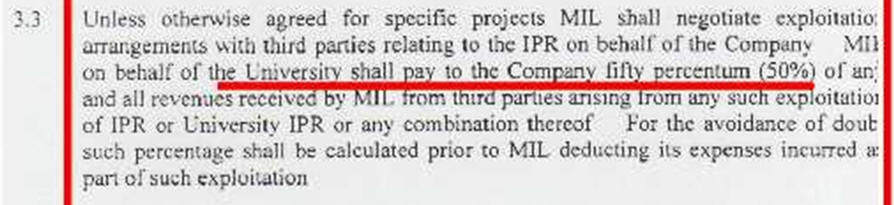

MIL was the business arm of the Victoria University of Manchester.
The MIL officers Bill dealt with played no part in the subsequent intimidating acts or cover-up.
Unfortunately the good UMIST researchers and the good MIL staff left the University shortly after amalgamation. But the people who had caused all the problems stayed behind.
Manchester University honored or breached this contract, depending on what suited them best. In contrast Bill, who operated on very limited finances and could not afford legal representation, was at their mercy.
Bill lost his £140,000 retirement savings working on SALi. A large fraction of this was was spent on international patent protection. The new University would have shared in the royalty benefits. But when a tiny number of its employees misbehaved, it tried to shift all the costs and blame onto him. That is, Bill was treated and recorded as a dodgy contract breaching client who owed the University money. Not an honest profit sharing partner.
This was convenient for building a new corporate identity in the delicate months after amalgamation. But it could prove disastrous in the long term because a false reputation based on lies and fraud requires the continual addition of more lies to fight Bill's attempts to expose them.
After the royalty sharing agreement ran out the University maintained its grip on Bill's intellectual property by creating false patent evidence that "proved" that SALi Technology was not his invention anyway.
We might expect an aggressive foreign competitor to get up to this sort of illegal trickery, but not a British University. Click to see the evidence.
Why Bill as a proud Manchester man and supporter of his local University has gone public in exposing the unethical Manchester University behaviour
Primarily Bill is motivated by a quest for justice and a desire to clear his name. But he also has a strong financial incentive. (As explained on the "What is SALi?" page, he has lived frugally since 1986 to build up funds to develop SALi Technology. As a result, repairs to his home have been badly neglected. (Witty friends refer to his home as "The favela.")
He found himself locked into a legal agreement where control of his intellectual property shifted to a University where:
(i) The remaining researchers were willfully publishing misleading research that suggested SALi Technology was ineffective.
(ii) There is evidence that his IP was secretly being handed over to the Chinese
(iii) Senior management was prepared to abuse the good name of the highly respected solicitors Eversheds, to create a false claim for payment, to mislead Bill's MP, when he got too close to the truth.
(iv) A later formal enquiry report misled readers by failing to mention the royalty sharing agreement.
It also failed to cite the good SALi research at Cardiff University which showed what financial opportunities Manchester had thrown away. Instead, as we explain on the PedSALi page, it created false evidence to suggest that Bill was professionally incompetent and untrustworthy. This allowed the University to sidestep the injustice about Bill being locked into an unfair legal agreement.
(v) Manchester University was prepared to protect its reputation at the cost of pedestrian lives.
When the EU abandoned its pedestrian safety requirements in 2003 it proposed to implement them in 2012, provided that a technical solution emerged.
Cardiff University was keen to work with Bill and rise to the challenge. But its EPSRC funding bid was rejected because "Manchester University had already done the work".
If the senior management at Manchester University, Lord Sainsbury or the formal enquiry panel had possessed the moral courage required to confront the Manchester fraud, Cardiff University may have received its funding. As a result, many pedestrian deaths and painful injuries on European roads since 2012 might have been avoided.
Secondary consequences
Bill works as an inventor. So the high financial, health and time wasting cost cost of misbehavour at Manchester University has had serious knock-on effects.
Here is an example of how his work has been slowed down:
Bill has received £180,000 public funding to help Latent Power Turbines Ltd develop a new type of power generator. This work is making good progress and details are published on a linked page. If successful, Latent Power Turbines will reduce UK energy bills and make a significant contribution to reducing carbon emissions.
Bill has been working on his power generator designs since he studied thermodynamics at university in the 1960’s and filed his first related patent application 22 years ago.
Back in 1996 when he went to Manchester University as a mature student his hope was that he would gain academic credibility by earning a PhD, commercial credibility by bringing SALi products to market and earn money for investment in LP Turbine research from SALi product royalties. However, the problems at Manchester University have delayed LP Turbine development by up to ten years.
Current research verifies that Latent Power Turbines exhibit counter-intuitive properties that will surprise anyone familiar with the laws of thermodynamics. [The trick is this: By placing a heat engine inside a mechanical engine is is possible to build a mechanical engine that is 100% thermally efficient.]
If these results scale up as predicted, there will be a backlash against academic science when this “ten year” delay in reducing energy bills and defeating climate change becomes public knowledge.
Appendix 3
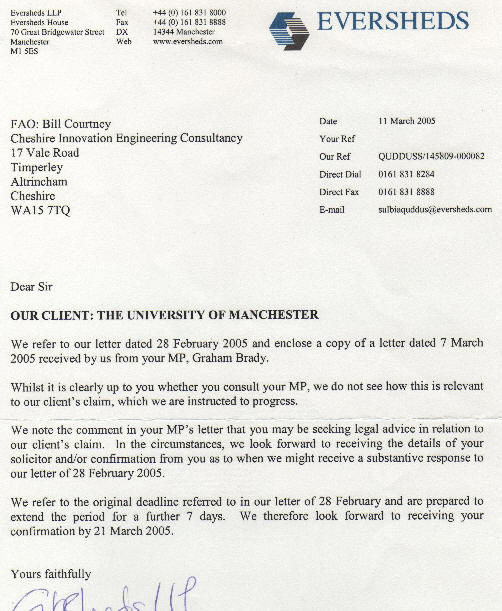
Bill Courtney refused to approve the transfer of public funds to Manchester University until the CrashSALi work was done correctly.
When Graham Brady MP started asking awkward questions about the SALi research at Manchester University, the University tried to discredit Courtney by using Eversheds Solicitors to pursue him for debt recovery.
Comments
(i) Using legal threats to hide bad research, deceive a member of parliament and intimidate a whistle blower is wrong.
(ii) Manchester University was a profit and loss sharing partner with Cheshire Innovation. The contract extract in Appendix 2 proves this. The University has no legal right to unilaterally ignore this contract and treat him as a bad debtor client, just to deceive an MP and hide its contractual failings.
(iii) Courtney was acting as a trustee of public money when he refused to hand over public funds until the CrashSALi work was done correctly. Lord Sainsbury should also have acted in the public interest, not for short term political convenience.
Q. Was Eversheds deceived by Manchester University?
A. When Bill pointed out to Eversheds that he was a profit and risk sharing partner of the University who was trying to defend the public purse, not a defaulting debtor, their intimidating letters ceased.
Aftermath
The University has refused to release its correspondence with Eversheds, so Bill's "bad debtor" status remains unclear.
For proof of this refusal, please click.
The Manchester University Formal Enquiry Panel should have investigated this complaint.
Legal notes
1. Bill Courtney would have been committing criminal fraud if he agreed to sign public funds over to Manchester University for the CrashSALi project, when he had written proof that the work had been done wrong and in breach of contract.
2.Harassing a person to commit criminal fraud in order to obtain a financial gain is classified as "blackmail" or “demanding money with menaces.”
It is a criminal offense. [Maximum prison sentence, fourteen years.]
http://www.policespecials.com/forum/index.php?/topic/56187-demanding-money-with-menaces/
and
http://www.inbrief.co.uk/offences/blackmail.htm
Unfortunate coincidence?
Bill Courtney is a sole trader. This means that by standing up to the University he was putting all of his financial assets in jeopardy.
A couple of days after receiving the first intimidating letter from Eversheds, his left eye started hemorrhaging. Shortly after receiving their second intimidating letter his right eye started hemorrhaging. He is now registered partially sighted.
in 2010, as a result of his eyesight problems, he was knocked down by a car while crossing the road. Until that time he had preferred to clear his name discretely, to protect the University reputation. After his accident the issue of pedestrian injuries became personal and he decided to publish his evidence in detail on this web site.
The stress caused by fighting to expose research and formal enquiry fraud is ongoing. In 2015 he is still being treated for high blood pressure.
Appendix 4
How a Formal Enquiry whitewashed the Manchester research failings
As discussed on the PedSALi page, the University held a Formal Enquiry into Courtney’s complaints about the failings of the CrashSALi and PedSALi projects.
Courtney submitted evidence to the Enquiry about the intimidating use of Eversheds, but there is no reference to Courtney's evidence in the Report.
This is surprising because the Panel was supplied with sixteen (16) very detailed arguments opposing the use of Eversheds by Manchester University. Click here to view the arguments.
Q. How did the Report explain the failure to carry out research into suspension units using the materials laid down in the contract?
A. The Formal Enquiry Report foes does not offer an explanation or make any reference to the materials used. Instead, as we explain on the PedSALi page, it created false evidence against Courtney, implying that he was an unreliable person who could not be trusted.
Q. Traditionally bad research is exposed when other researchers subsequently do the correct work. In the present case, good CrashSALi type research was done in China. Were the good Chinese research findings submitted to the Enquiry for comparative examination?
A. Yes the good research was submitted for examination but it is not mentioned in the Formal Enquiry Report.
This failure to compare the research evidence is one of the reasons why Courtney claims that the Manchester University Formal Enquiry process was corrupt.
Updates December 2014
Two innocent parties have been drawn into the SALi research scandals that threaten to undermine the international reputation of British science. Others are at risk of being drawn in during the coming months.
(i) The chair of the corrupt Manchester University formal enquiry panel has been appointed as Head of the Physics and Astronomy Department at Leeds University. She will be bringing a specialist team of materials researchers from Manchester University with her.
Bill has written to Leeds University warning about the pending threat to its reputation by secondary association with the bad behavior at Manchester University.
(24 October 2014.)
(ii) The present government has awarded £235 million to Manchester University for it to become the hub for UK materials research. Leeds and other North of England Universities will be linked by electronic spokes to the hub.
In principle this is good because Manchester hosts many world standard materials researchers.
But, because of the huge sums of money involved and the dark secret at the heart of Manchester University, there is a danger that other Northern Universities will find themselves being drawn slowly into the cover-up and corruption.
Bill has written to his MP requesting that the relevant government departments investigate the anti-British and anti-science behavior of a tiny number of Manchester University employees before the funds are handed over. (9 December 2014.)
Trust nobody!
Visit the PedSALi page for details about how you can check the University side of this story.
Links
PedSALi web page.
Q. Would Bill Courtney be willing to work with Manchester University at a future date?
A. Bill describes himself as “a proud Manchester Man.”
The vast majority of staff at the University had nothing to do with the SALi research fraud. Their professional conduct should not be judged by any of the evidence presented on this website. In order to demonstrate his belief in this statement, Bill would be happy and willing to work with the University developing any of his inventions.
BUT
(i) He does not tolerate research fraud and believes that the fraud problems described on this website need to be openly and fully investigated by a totally independent third party.
(ii) Lessons need to be learned. As part of his contribution to this process he makes a number of proposals on the following web pages Science under attack and Innovation "apps"
(iii) Fair compensation needs to be paid by the University for the distress and loss of commercial opportunities caused by the cover-up of the SALi research fraud.
SALi and global warming
Bill Courtney’s original business plan was to use SALi as a cash cow invention that would generate the funds he needed to develop a new type of low cost green energy technology.
Unfortunately SALi research fraud at Manchester University undermined this plan and the green energy work has ground to a halt. As a result Britain may have lost a world leading position in fighting climate change. And as a consequence, your energy bills may be far higher than necessary.