
Internet shopping is booming.
The appeal is convenience; you order your goods over the internet and get them delivered to your door.
The snag is,
You have to hang around all day waiting for delivery.
In principle, the problem can be solved by having a secure box or locked porch that the delivery team have access to.
But there are problems:
(i) Customers want a choice of locks and storage box designs.
(ii) Customers are not be keen on giving keys away to strangers.
(iii) Delivery workers don't want the hassle of carrying lots of keys around.
(iv) There needs to be scope for innovation in the lock and storage container manufacturing markets.
1792 Technology solves all of these problems.
* The cardboard key is destroyed as the lock is opened.
* It doubles up as a delivery label.
* The key is designed to open a range of mechanical and electronic locks, providing scope for innovation in lock design.
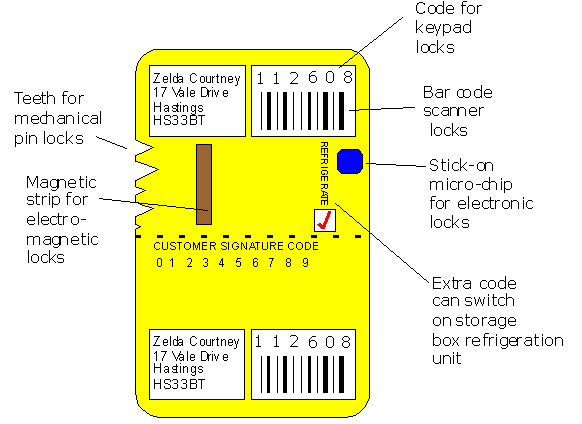
Fig. 1. The 1792 cardboard key is designed to operate a range of locks. The essential design features would be agreed by by major lock manufactories in a pre-competitive collaboration. The options illustrated are only suggestions.
The action of opening any 1792 compatible lock would destroy the key, leaving half of it inside the lock.
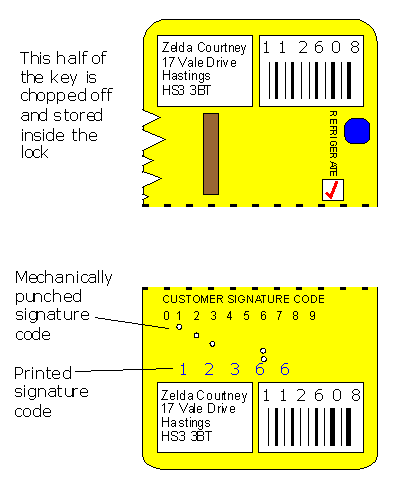
Fig. 2. The "signed" stub provides the delivery company with proof of delivery. Punched holes and printed signature codes are just two of the options lock manufacturers could agree on.
Once a common key design has been agreed, the rest is up to the market. Here's three examples of market segments:
* Technophobe living in a flat. Takes occasional deliveries of small items.
Buys a small secure storage box, protected by a keypad operated lock.
* Technophobe living in a house with an external porch door.
Has a 1792 keypad lock fitted to the outer door of the porch.
* Regular computer user who is at ease with modern technology.
Has an electronic lock fitted. This is wi-fi or Bluetooth coupled to their computer.
1792 Technology - Fraudulent Keys
Simple mechanical versions of the lock could be set to open once only, before the customer removes their goods. So, if a thief breaks into the storage container using a copied key, they will find it empty.
Electronic versions of the lock, linked to home computers would be immune to the forgery problem, because the operating software could be designed to generate a fresh security number for each home delivery at the same address.
When placing an order over the internet, the automatic form filling software would also generate a fresh random number for each delivery.
Why is it called "1792 Technology"?
1792 locks include a Guillotine to chop the keys in two. The Guillotine was invented during the French Revolution in 1792 by Dr. Guillotine.
1792 Lock & Key Technology is a joint Bill Courtney/Richard Klee invention.